
The Most Common Decluttering Mistake Clients Make
10-minute read time.
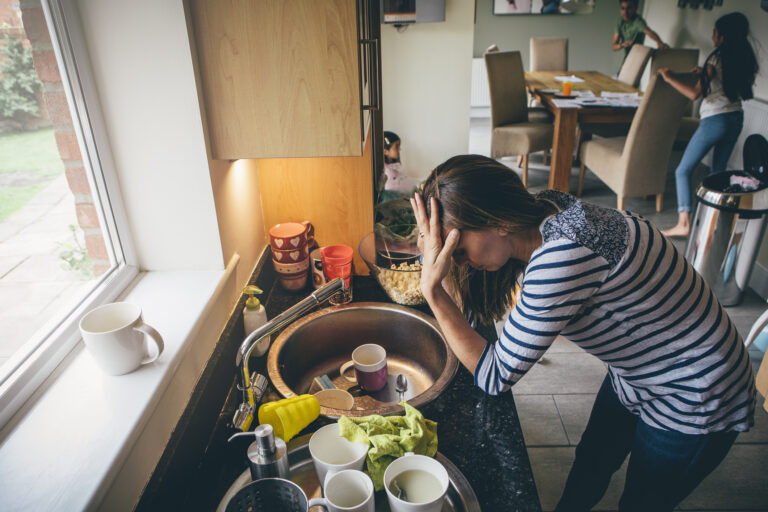
For my clients, there is usually one thing that slows the whole decluttering process down. This one thing happens multiple times throughout my time with them. It’s the nagging thought that comes into their heads, “Am I going to need this later?”
Whether they used it a lot before, but don’t anymore, or they don’t love it, but they don’t hate it either. That one question can leave people paralyzed by indecision. I’ve noticed that in these instances, people tend to revert to putting the item in the garage or basement to decide on “later.” In most cases, though, later never comes.
At first, this may feel like progress still. You’re clearing the area that you intended to clear. Even though you know that you’re going to have to deal with the item eventually, the decision also seems like it will be easier in the future. However, in the future, you may be even more pressed for time or feeling even more stressed about the decluttering decisions since now your basement or garage is full of “maybes” and “someday” items.
This is the most common decluttering mistake that I see clients make. Putting basically all of the items that they are not sure of in the basement or garage. Yes, some items actually DO belong in these areas, but those are not what I’m talking about here. (And if you want help breaking that cycle, you can download my free decluttering guide HERE.)
Why This Feels Like The Right Choice In The Moment
It’s important to point out that people do not do this because they are lazy. They do it either out of habit or because they are paralyzed by decision fatigue. Decision fatigue happens to all of us when we get to a certain point of decluttering, where we just can’t make any more decisions. If you feel yourself experiencing decision fatigue, don’t just start putting stuff “away” to be decided on later. Take a break, whether that’s for an hour or a day, and come back when you’re feeling better.
If you’re feeling overwhelmed by the entire process, I share more practical ways to reset and regain clarity in this post on how to organize your life when you’re feeling overwhelmed.
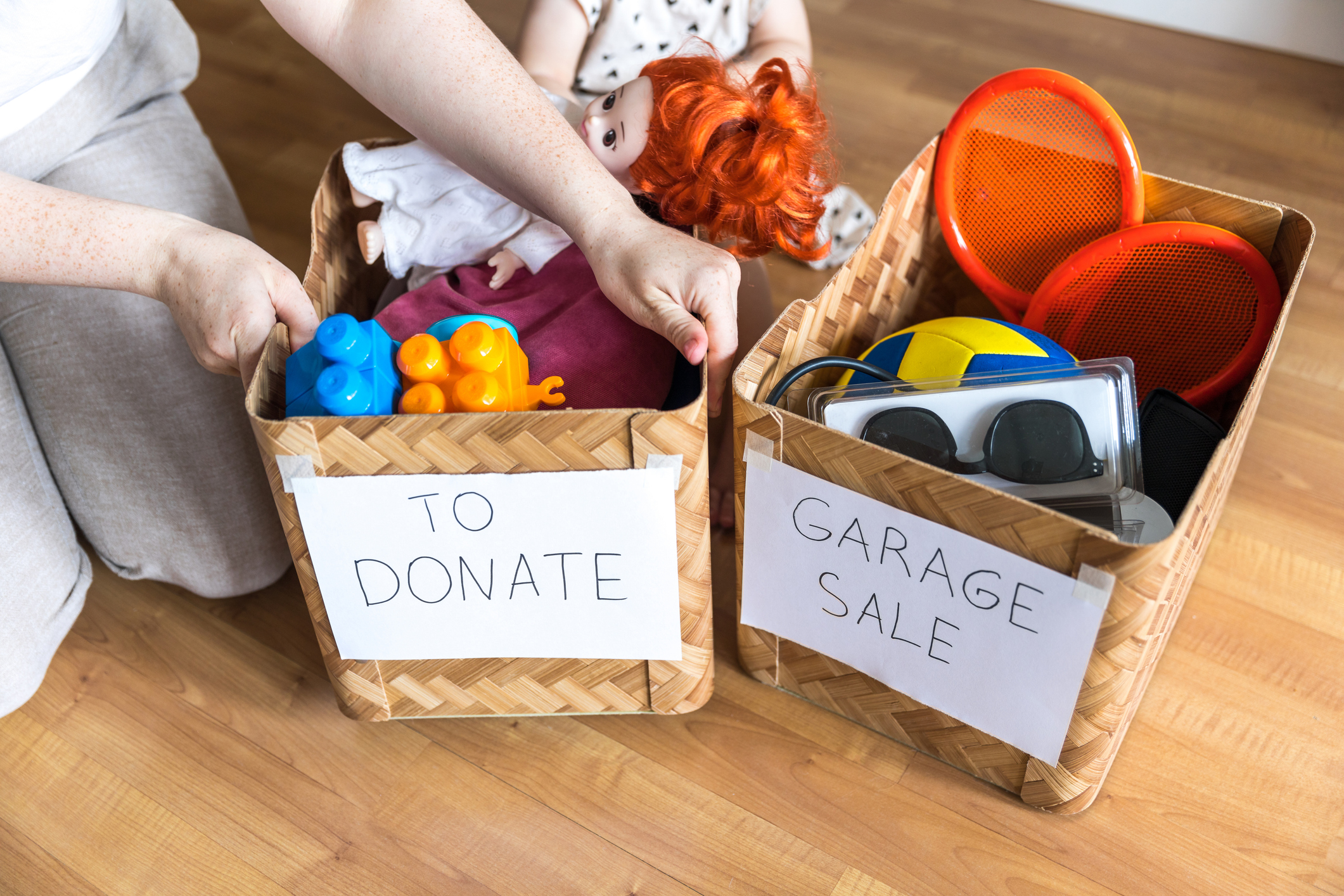
If you are still unsure of an item, after you’ve taken a break, then put the item in a “maybe” box. This box needs to be small, so you can’t fit too many items in it. If it fills up, don’t just get another box. You need to either declutter some of the items that are in the box or declutter the items that you want to put in it.
Once you’re done decluttering, close the box and put a date on it. The date will be a month from the current date. Put a reminder in your phone, too. If you haven’t looked in that box or used any items in it by that date, then it gets decluttered. Do not look through the box again before you declutter it. Just immediately take it to the donation center.
Out of Sight Doesn’t Mean Resolved
We’ve all heard the phrase, “Out of sight, out of mind.” But is “out of sight” really something that you should be doing with your clutter? In my opinion, “no.” This can feel like relief in the short term, but it doesn’t actually solve the problem. It only postpones the decision.
When an item goes into the basement or garage for no other reason than storing for “later,” with the exception of holiday decor, it is still clutter. Just in a different location now. It still takes up space. It still represents an unfinished decision. Whether you realize it or not, that decision will still weigh on you every time you see it.
Not only that, but eventually your “storage” areas will fill up…then what?
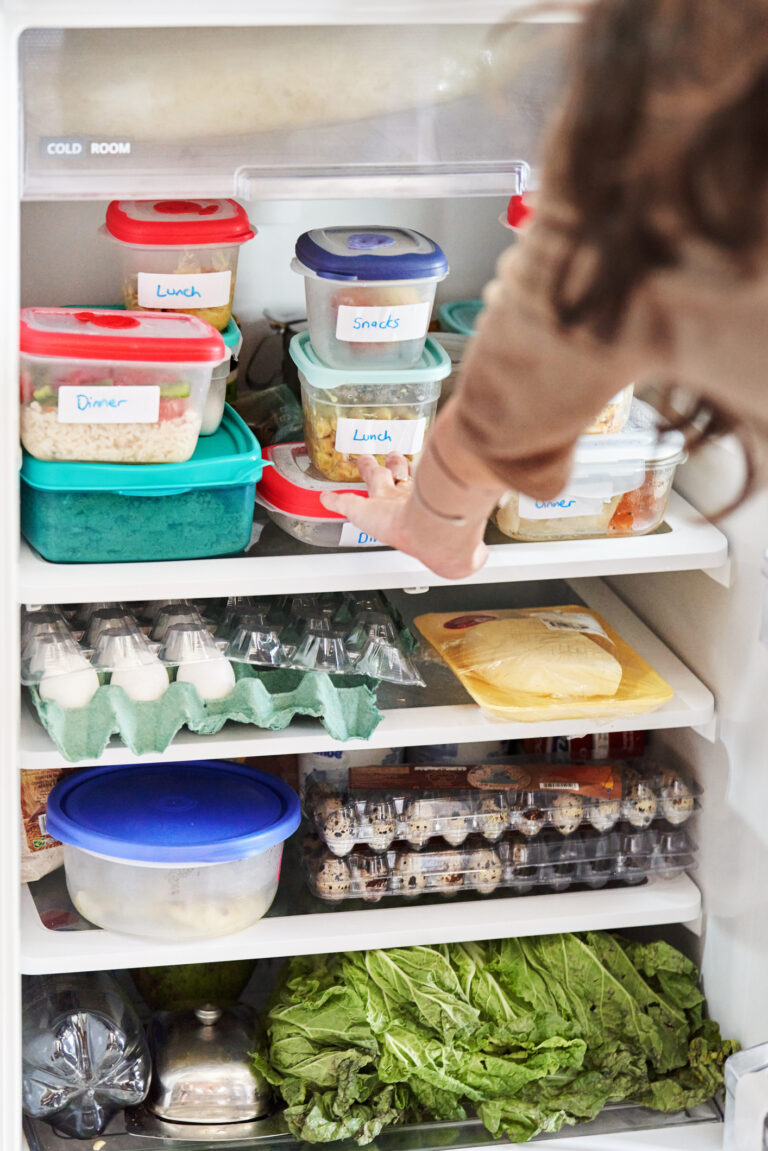
It’s like saving leftovers that you didn’t really like, but you didn’t hate them either. Eventually, you’re going to clean out your fridge and likely throw them out anyway. When that point comes, you will likely feel even more overwhelmed than you do now. Not about leftovers…but hopefully you get the idea.
Basements and garages frequently turn into “catch-all” places where nothing has a clear home or purpose. Instead of being functional storage areas, they become holding grounds for guilt, indecision, and the “maybe, someday” items.

The Hidden Cost of Delayed Decisions
Putting items “away” for later increases decision fatigue rather than reducing it. Every item that you store to be decided on later just adds to your mental backlog. This is one of the reasons routine decluttering is so important. When you regularly clear out what you no longer need, decisions don’t pile up and become overwhelming. When you eventually revisit those items, you don’t have just one “maybe” item to decide on but a whole area of “maybes” instead.
Decision fatigue makes everything that much harder. It lowers your confidence, increases anxiety, and makes you more likely to keep items simply to avoid deciding on them.
I’m not denying that decision fatigue happens. But space is valuable, and you really need to be careful with what you are choosing to keep. There is a physical cost, too. Storage areas need to be cleaned and maintained just as much as the rest of the house does. You end up spending time and energy organizing items that you may never even use.
When our spaces are filled with items that we are unsure of, it stops being useful. That space could be better used to support the life that you are living today. Don’t let your space become a reminder of who you once were or of your unfinished projects. If you want practical ideas for maximizing what you already have, I share more in this post about how to make the most of your space.
Real Client Example
I once worked with a woman who I was helping to declutter her kitchen. She was frequently walking items down to her basement. At first, I assumed those items were supposed to be in the basement. But by the fifth time she had done this, I paused and asked her a simple question.
Do these items actually belong in the basement, or are you just “storing them for later”?
She responded, “Well, we might need these again.”
The truth was that none of the items that she was bringing into the basement truly belonged down there. They were not seasonal. They were not backups. She was simply afraid of making the wrong choice.
The clutter itself is not necessarily the overwhelming part. It’s the decisions and guilt attached to it all.
A Better Solution Than The Basement
The goal of decluttering is not to force yourself to make perfect decisions. Uncertainty is normal. That’s why I allow my clients to have a “maybe” bin, as mentioned above.
The key difference is how the bin is used.
It’s not used as an infinite storage solution, but merely a vessel to help reduce the overwhelm caused by decision fatigue. This bin is designed to be small, creating a boundary to stay within. When you give yourself limits, you’re more easily able to decide what is truly worth the space. Whereas, with a garage or basement, you can essentially store whatever you want there. Yes, it will eventually fill up, but the limitations are much less strict.
The “maybe” box forces intentional decision-making. Once it fills up, you either get rid of something that is already in the box or get rid of the item that you want to add to it.
This box can be put in the basement or garage, but the main idea is that there is essentially a “timer” on it, and once that timer goes off, decisions need to be made, or it goes.
Why The Maybe Box Works
This approach works well because it acknowledges the reality of decluttering. Decluttering is mentally demanding, and people need breaks from the decision-making. Having a designated place for uncertainty makes the process that much more sustainable.
At the same time, it prevents making avoidance a habit. The box is not a permanent solution. Instead, it is a tool with rules and limitations.
It also helps to build trust in your own decision-making. Each time you follow through and realize that you did not need any of those items, your confidence in yourself grows. This makes future decisions easier. If you want a guide for how to stay consistent, my free decluttering guide walks you through it in a simple, realistic way. You can download it HERE.

When Basement and Garage Storage Actually Makes Sense
Not everything that is stored in the basement or garage is a problem. These spaces are useful when items actually have a home there.
Seasonal decorations, sports equipment, tools, and maintenance supplies often make sense in these areas. The difference is intention and that they actually have a designated home.
Items that belong in these areas have a purpose, a category, and a retrieval plan. You know what they are, where they are, and when you will use them again.
Undecided items do not meet these criteria. They are stored out of fear and indecision, not function.
Questions to Ask Yourself Instead
When you catch yourself moving something to the basement or garage, pause and ask yourself one question.
Is this where this item lives, or am I just delaying a decision?
If you are delaying a decision, ask yourself this.
If this item were ruined in a fire, would I be upset or replace it?
This question cuts through the emotion and gets to the truth of value. If you would not replace it, it may not deserve a place in your home.
For instance, if it’s the only pair of scissors that you own, you likely wouldn’t be upset if you lost it, but you would replace it. On the other hand, if your favorite china got ruined, you may not be able to replace it, but you would likely be upset.
The Long-Term Impact of Facing Decisions
Sooner or later, every item requires a decision. Delaying it doesn’t remove the decision. It just makes it heavier, as the longer we own something, the more of a connection we develop with it.
When items are buried under other undecided items, the decision just becomes harder. In the meantime, you spend time cleaning around them, moving them, and managing them.
That is energy wasted on something that may never be used again.
Facing decisions earlier creates lighter spaces and more confidence in your ability to let things go. Throughout the years, I have found out that even if I did end up needing something that I decluttered, I just find something else suitable enough to use instead.
People make this out to be a bigger deal than it actually is. You might be upset for a moment, but then it passes, and everything is fine again.
Decluttering is About Freeing Yourself
Decluttering is not about making your home look good, although it does help. It’s about getting rid of what no longer serves you, so your space can support how you live now. And maintaining that freedom requires consistency, not just one big clean-out. That’s why routine decluttering matters more than most people realize.
Moving items to the basement or garage may feel like relief. However, relief comes from closure, not avoidance.
When you stop hiding your decisions and start resolving them, your clutter loses its power over you. And that’s when lasting order can become possible. If you’re ready to stop delaying decisions and finally feel lighter in your space, download my free decluttering guide. It will walk you through where to start and how to make confident decisions without overwhelm.